
Aquarium Equipment
Aquarium equipment is the heart of every successful tank – without properly functioning filtration, lighting, heating and aeration, you simply can't maintain a healthy, stable environment for fish, plants or invertebrates over the long term. Good-quality equipment works quietly in the background, providing conditions that are, quite literally, a matter of life and death for the tank's inhabitants. Underestimated or undersized equipment is the most common cause of fish deaths, even among experienced aquarists.
#ShowMore#
A properly assembled set of aquarium equipment forms an interconnected system – filtration cleans the water and maintains biological balance, lighting drives plant photosynthesis and the fish's natural daily rhythm, a heater keeps the temperature stable, and aeration replenishes oxygen and supports water circulation. A failure in just one part of this system can put the whole tank at risk within hours.
What you'll find in the Aquarium Equipment section
- Aquarium filters – the single most important piece of kit in any tank, providing mechanical, biological and chemical filtration. A correctly sized filter should turn over the entire volume of the tank 3–5 times an hour. We stock internal filters for smaller tanks, powerful external filters for larger set-ups, and specialist filters for marine aquariums.
- Aquarium lighting – lighting serves two essential functions: it drives photosynthesis in aquatic plants and creates the natural day-night cycle fish need for their wellbeing. Modern LED lighting is energy-efficient, long-lasting and allows precise control over intensity and light spectrum. Planted tanks need stronger lighting than those without live plants.
- Aquarium heaters – maintain the stable water temperature that tropical fish species need. A heater with a built-in thermostat regulates the temperature automatically and prevents dangerous fluctuations. Choose the heater's wattage according to tank volume – as a rough guide, 1W per litre of water for typical room temperatures.
- Aquarium aeration – air pumps and diffusers oxygenate the water and support circulation. They're essential in densely stocked tanks, during fish treatment, or if filtration fails. Fine bubbles from a good-quality diffuser also add a nice aesthetic touch.
- Aquarium pumps – powerhead and circulation pumps keep water moving around the tank, prevent dead spots with no circulation, and simulate natural currents. They're particularly important in marine aquariums and large tanks housing demanding species that need strong water flow.
- Automatic feeders – a reliable solution for feeding fish on schedule when you're away. Modern automatic feeders can be set for different portion sizes, frequencies and food types. They're a great investment for any aquarist who travels or isn't home every day.
- Spare parts and accessories – replacement impellers, hoses, baskets and other parts to keep your equipment in perfect working order. Regularly replacing worn parts extends the life of your equipment and prevents sudden breakdowns.
How to size your aquarium equipment correctly
Getting the sizing right is crucial – equipment that's too weak won't maintain a healthy environment, while equipment that's too powerful can stress fish or needlessly increase running costs.
- Filter – flow rate should be 3–5 times the tank volume per hour. For a 100-litre tank, look for a filter rated at 300–500 litres per hour. For more demanding species or densely stocked tanks, choose a more powerful option.
- Lighting – for tanks without live plants, 0.3–0.5W per litre is enough. Planted tanks need 0.5–1W per litre or more, depending on how demanding the species you're growing are. Lighting should run for 8–10 hours a day – longer periods encourage algae growth.
- Heater – as a rough guide, 1W per litre of water for a tank kept at normal room temperature. For larger tanks or cooler rooms, choose a more powerful heater. Two weaker heaters are more reliable than one strong one – if one fails, the other still provides some heating.
- Aeration – choose the air pump's output based on tank volume and the number of diffusers. Overly strong aeration can stress fish that prefer calm water, such as bettas or discus.
Maintaining your aquarium equipment
Regular maintenance is just as important as choosing the right equipment in the first place. Neglected equipment works inefficiently and can fail suddenly at the worst possible moment.
- Clean the filter media every 2–4 weeks – always in tank water, never in clean tap water. Chlorine in tap water kills off the beneficial bacteria in your biological filter.
- Check and calibrate your heater regularly – the thermostat can gradually drift away from the set temperature. An accurate thermometer is essential in every tank.
- Replace lighting regularly, even if it's still switched on – output and light spectrum degrade over time, and plants can stop thriving even though the light still appears to work.
- Clean or replace aeration diffusers when the bubbles get smaller – a clogged diffuser puts extra strain on the air pump and shortens its lifespan.
Practical tips for aquarium equipment:
- Always keep a spare heater on hand – a heater failure in winter can cause mass mortality among temperature-sensitive fish within a few hours.
- Plug your equipment in through a surge protector – electronics near water are especially vulnerable to power surges.
- During a power cut, fish can survive several hours without filtration, but oxygen runs out faster in densely stocked tanks. A battery-powered backup air pump is a cheap safeguard for situations like this.
- Always test new equipment before putting it in the tank – calibrate heaters in particular in a bucket of water with a thermometer.
- Route cables and hoses so that evaporating water can't drip into a socket – a drip loop below socket level is a basic safety measure every aquarist should take.
Good aquarium equipment is an investment in the health and beauty of your tank – and, ultimately, in the wellbeing of everything living in it. Choose equipment correctly sized for your type of tank and keep it in top condition, and your aquarium will reward you with clean water, healthy fish and the beauty of the underwater world.


Product sorting
List of products

The Air 2000-4 air pump is designed for aquariums ranging from 50 to 400l.


A replacement spindle for EHEIM filters and pumps, with clamping sleeves.

A replacement impeller for the Fluval FX-5 and Fluval FX-6 external filters.

Replacement lid seal for the Fluval FX-4, FX-5 and FX-6 external filters.

A clip holder for attaching the hose of a Fluval FX-4, FX-5 or FX-6 external filter to the back of the aquarium.


Clearmax/Green-X phosphate remover, which prevents algae growth.

A replacement carbon filter cartridge for the EasyCrystal Box 600 filter.

This activated-carbon filter medium effectively removes toxins, dyes and yellow discolouration, keeping your aquarium water crystal clear.


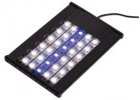
This product is designed as an energy-efficient aluminium light fitting for animals and plants.

Carbon foam for Fluval FX-4, FX-5 and FX-6 external filters.

The set includes: impeller cover (101-20113), impeller with ceramic shaft and rubber insert (101-20109), head gasket (101-20038).

A replacement foam pad (pre-filter) for Fluval FX4, FX5 and FX6 external filters.

A set of filter media for the EHEIM Professionel 4+ 350.

A foam insert for the Fluval FX-4, FX-5 and FX-6 external filters.


Fine and coarse filter pads for mechanical and biological filtration. Replacement media for the aquacompact 40/60 filter system.

Pre-filter media made from hollow ceramic rings, for capturing large particles of debris.


A replacement filter cartridge for EasyCrystal 250, EasyCrystal 300 and Tetra Silhouette filters.

A chambered biological filter - a 3-stage biological filter for freshwater and marine aquariums up to 200 l.

An aquarium pump with 7 W power and a flow rate of 200-550 l/h.


A replacement carbon cartridge for the Fluval U4 internal filter.

A carbon cartridge for Fluval external filters - 3x 100 g.

An optimised biofiltration medium with excellent use of volume and long intervals between cleanings.

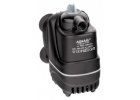
An internal submersible filter with an aeration system for aquariums up to 60 l.


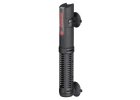
A heater with thermostat provides even, reliable heat distribution - ideal for maintaining the optimum climate in aquariums of 25-60 l.

An internal submersible filter with an aeration system, for aquariums up to 50-110 l.


The Air 2000-2 air pump is designed for aquariums of 15 - 50 l.


The King 3 multi-purpose submersible pump, which can be installed horizontally or vertically, is suitable for both fresh and salt water.