
Aquarium Filters
A filter is the most important component of any aquarium – without properly functioning filtration, you cannot maintain a healthy, stable environment for fish or plants in the long term. An aquarium filter performs three essential functions: mechanical filtration, which traps solid debris, biological filtration, which breaks down toxic nitrogen compounds using beneficial bacteria, and chemical filtration, which removes dissolved pollutants. All three components need to work together – a filter that only keeps the water mechanically clean isn't enough.
#ShowMore#
Of the three, biological filtration is the most important and the most delicate. Beneficial bacteria colonising the filter media break down the toxic ammonia produced by fish, first into nitrites and then into the far less harmful nitrates. This process, known as the nitrogen cycle, is the foundation of a healthy aquarium – without a functioning biological filter, toxins build up and can kill fish even when the water otherwise looks clean. A new filter needs 3–6 weeks to become fully colonised with beneficial bacteria.
Types of aquarium filters
- Internal filters – filters placed directly inside the aquarium and held to the glass with suction cups. They're compact, quiet and affordable. Suitable for smaller aquariums up to around 100–150 litres, or as a supplementary filter in larger tanks. Their drawback is that they take up space in the tank and offer limited capacity for filter media.
- External filters (canister filters) – powerful filters located outside the aquarium, connected by hoses that draw water in and return it. They offer a large capacity for filter media, quiet operation and a high flow rate. Ideal for aquariums from 100 litres upwards, and the standard choice for demanding biotope or planted tanks. An external filter can be filled with a range of filter media tailored to the specific needs of the aquarium.
- Corner filters and box filters – simple filters powered by an air pump. Ideal for small aquariums, spawning tanks or quarantine tanks, where gentle water movement is an advantage. They're inexpensive and easy to maintain.
- Hang-on-back filters (HOB) – filters that hang on the rear wall of the aquarium, with water overflowing through the filter media. Especially popular in American fishkeeping for their simplicity and easy maintenance. Suitable for aquariums up to 200 litres.
- Sump filters – a system using an auxiliary tank beneath the main aquarium that acts as a powerful filtration unit. The standard for larger aquariums and marine tanks, offering huge amounts of space for filter media and equipment. They require more experience to install and maintain.
- Marine aquarium filters – specialised filters combining mechanical filtration with a protein skimmer that removes organic matter before it has a chance to break down. An essential part of any marine aquarium.
Filter media and their functions
Choosing the right filter media is just as important as choosing the filter itself. Different media serve different functions, and a good filter should contain a combination of them:
- Filter wool and sponge – mechanical filtration that traps solid debris and leftover food. Always place these as the first stage of filtration so they catch coarse dirt before it reaches the biological media. They need regular cleaning or replacing.
- Ceramic rings and biological media – porous ceramic media with a huge surface area for beneficial bacteria to colonise as part of biological filtration. This is the heart of any filter, and it should never be rinsed under clean tap water – chlorine kills the bacterial colony.
- Activated carbon – chemical filtration that absorbs dissolved pollutants, medication residues, dyes and odours. Useful after treating fish, to remove leftover medication from the water, or to deal with water odours. Activated carbon becomes exhausted after 2–4 weeks and must be replaced – once spent, it starts releasing trapped substances back into the water.
- Zeolite – absorbs ammonia from the water and is useful in emergencies, such as when the biological filter is overloaded or a new aquarium is being set up. It needs regular replacement or regeneration in a saline solution.
- Peat – lowers pH and water hardness and releases humic acids that mimic blackwater biotope conditions. Suitable for species that need soft, acidic water, such as discus, angelfish or tetras.
How to choose and size a filter correctly
- Filter flow rate – a filter should turn over the entire volume of the aquarium 3–5 times an hour. For a 100-litre aquarium, look for a filter with a flow rate of 300–500 l/h. For more demanding species or densely stocked aquariums, choose the upper end of that range or a more powerful model.
- Type of aquarium – for calm-water species such as discus or bettas, choose a filter with adjustable flow or a spray bar to diffuse the outflow. Species from flowing rivers, on the other hand, appreciate a stronger current.
- Volume of filter media – a larger filter basket means more room for biological media and stronger biological filtration. It's always worth investing in a bigger filter than strictly necessary – extra biological capacity is never wasted.
How to clean an aquarium filter properly
Correct filter maintenance is key to preserving biological filtration – the most common mistake is cleaning the filter too aggressively, which destroys the bacterial colony.
- Clean the filter every 2–4 weeks, depending on how heavily stocked the aquarium is and how much you feed.
- Always rinse the filter media in water taken from the aquarium – never in clean tap water. Chlorine and chloramine in tap water kill the beneficial bacteria of biological filtration.
- Never clean the whole filter at once – always leave part of the biological media untouched so it can act as a seed for quickly rebuilding the bacterial colony.
- Clean or replace filter wool or sponge as needed – never replace all of the biological media at once, only ever a portion of it.
- After cleaning or replacing part of the filter media, monitor your water parameters for a few days – a temporary rise in ammonia or nitrite indicates a temporary weakening of biological filtration.
Practical tips for aquarium filters:
- Never run an external filter dry while cleaning it – running without water damages the impeller and can destroy the filter permanently.
- When adding new fish or after treating with medication, consider temporarily adding extra biological media or a bacterial starter to boost biological capacity.
- Check the hoses of an external filter regularly to make sure they're clear – algae or debris inside the hoses significantly reduce flow rate and filtration efficiency.
- Never switch off a new filter for more than 2 hours – without water flow and oxygen, the bacterial colony starts to die off, and recovery can take days to weeks.
- For extra peace of mind, combine two smaller filters rather than one large one – if one fails or is being cleaned, the other keeps biological filtration running.
A correctly chosen and properly maintained filter is the foundation of a stable, healthy aquarium. Invest in a good-quality filter with sufficient capacity and maintain it regularly – and your fish and plants will reward you with health, vitality and beauty.


Product sorting
List of products

A replacement spindle for EHEIM filters and pumps, with clamping sleeves.

A replacement carbon filter cartridge for the EasyCrystal Box 600 filter.

This activated-carbon filter medium effectively removes toxins, dyes and yellow discolouration, keeping your aquarium water crystal clear.


Carbon foam for Fluval FX-4, FX-5 and FX-6 external filters.

The set includes: impeller cover (101-20113), impeller with ceramic shaft and rubber insert (101-20109), head gasket (101-20038).

A replacement foam pad (pre-filter) for Fluval FX4, FX5 and FX6 external filters.

A set of filter media for the EHEIM Professionel 4+ 350.

A foam insert for the Fluval FX-4, FX-5 and FX-6 external filters.


Fine and coarse filter pads for mechanical and biological filtration. Replacement media for the aquacompact 40/60 filter system.

Pre-filter media made from hollow ceramic rings, for capturing large particles of debris.


A replacement filter cartridge for EasyCrystal 250, EasyCrystal 300 and Tetra Silhouette filters.

A chambered biological filter - a 3-stage biological filter for freshwater and marine aquariums up to 200 l.

A replacement carbon cartridge for the Fluval U4 internal filter.

A carbon cartridge for Fluval external filters - 3x 100 g.

An optimised biofiltration medium with excellent use of volume and long intervals between cleanings.

An internal submersible filter with an aeration system for aquariums up to 60 l.


An internal submersible filter with an aeration system, for aquariums up to 50-110 l.

This high-performance filter media is suitable for both freshwater and marine aquariums, as well as for all types of filters.

A replacement carbon cartridge for the TetraTec IN 400 and TetraTec IN 600 internal filters.

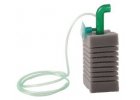
An internal submersible filter for smaller tanks, with an aeration system.

Replacement ceramic rings for the Tetra EX 400, 600, 700, 1200 and 2400 external filters.

Replacement foam with activated carbon for the Tetra IN 300 Plus internal filter.

A replacement drain valve for the Fluval FX-4, FX-5 and FX-6 external filters.


Carbon foam - a filter media for mechanical and biological filtration.

A replacement carbon cartridge for the Tetra EX 400, 600, 700, 1200 and 2400 external filters.

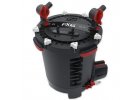
A high-performance canister filter. Flow rate: 2650 l / h.

Silicone tubing suitable for the Tetra APS 50-400 and most other aquarium air pumps. Diameter 4/6 mm (inner/outer).

Replacement ceramic rings for the Fluval U2, U3, U4 internal filter.

Fine and coarse filter pads for mechanical and biological filtration.

A replacement adapter with seal for the Tetra EX 1200 external filter.

A replacement impeller for the Tetra EX 1200 external filter.

A replacement impeller for the Tetra EX 400 Plus external filter.